
United One Step Closer in the Hunt for Jamaica’s Black Gold

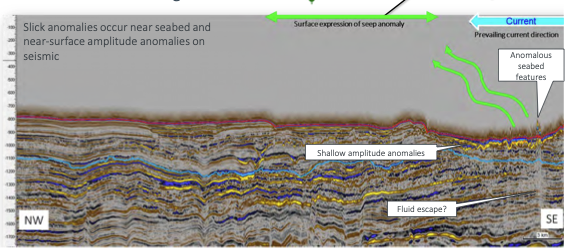
United has confirmed a successful MBES geochemical seabed survey offshore Jamaica identifying C4 and C5 hydrocarbons further supporting the theory that there is a working petroleum system offshore Jamaica which includes its 7 billion+ barrel Walton Morant license
United Oil & Gas has just released a technical update from its offshore Jamaica licence, and it’s an important step forward in the exploration story.
The company analysed 42 seabed core samples from its Walton-Morant licence and identified C4 and C5 hydrocarbons — specifically butanes and pentanes. These are heavier than typical microbial gas and are generally associated with thermogenic processes, meaning they are formed deep underground under heat and pressure.
In simple terms, this finding supports the theory that a working petroleum system exists offshore Jamaica.
For oil to accumulate, several things must be in place:
- A source rock that generates hydrocarbons
- Heat and pressure to mature those hydrocarbons
- Migration pathways to move them
- A trap and reservoir to store them
This update strengthens confidence in the first few of those — particularly hydrocarbon generation and migration, which are often the biggest unknowns in frontier exploration.
Building on Existing Evidence
11 wells have been drilled historically, as far back as the mid 20th Century and all wells (9 onshore and 2 offshore) confirmed the presence of hydrocarbons.
In addition, other supporting evidence to date includes:
- Satellite-detected oil slicks
- Known onshore and offshore oil seeps
- Previous thermogenic hydrocarbon data
- Geological modelling suggesting oil-mature source rocks
Collectively, the company is building a consistent picture: there is likely oil being generated in the basin.
Risk Re-Rating
United previously reported that a successful SGE survey would move one of United's key targets, Colibri from a one in five (19%) to one in three (32%) geological chance of success—a significant increase and high chance of success for frontier exploration.
This stems from an independent Risking Review Study published by Iapetus Geoscience Limited late last year.
In fact, it’s not only Colibri, United’s primary target that benefits from a successful SGE programme, but the risk uplift spans the broader Walton Morant licence including targets such as Oriole moving from a 13% to 21% GCoS.
These are comparatively high GCoS numbers when you consider frontier exploration plays can be as low as 5% GCoS
United will now integrate the SGE survey results into its full geological model to formally update each prospects GCoS.
Strengthening the Case for Farm-out
Investors will now turn their attention towards the potential of a farm-out of the licence. The data accumulated to date including the recent piston core results is exactly what potential partners will be looking for when considering frontier basins.
United themselves believe the results will support farm-out discussions, where a larger company could fund drilling in exchange for a stake.
From an investors perspective the latest news is a significant de-risking milestone and the ‘proven petroleum system’ narrative continues to strengthen.
Whilst the piston coring results were not necessarily a ‘binary requirement’ for achieving a farm-out, the latest results certainly strengthen the likelihood of one.
We don’t yet know what a deal could look like, but a farm-in partner or partners could potentially come in with a ‘free-carry’ (fund drilling costs) drill offer in exchange for a slice of the project, possibly including a cash consideration.
Even if United were to retain a modest percentage of the license under any deal, it would still be hugely significant for a £10M Market Cap company given the potential ‘size of the prize’ —up to 7 Billion barrels prospective resources, and could be transformational for the company and its shareholders.
United is moving from “theory” toward “evidence” — and in frontier exploration, that’s exactly how value is built step by step.