
Harena Rare Earths Raises £1.25 Million at a Premium as Strategic Review Targets Shareholder Value
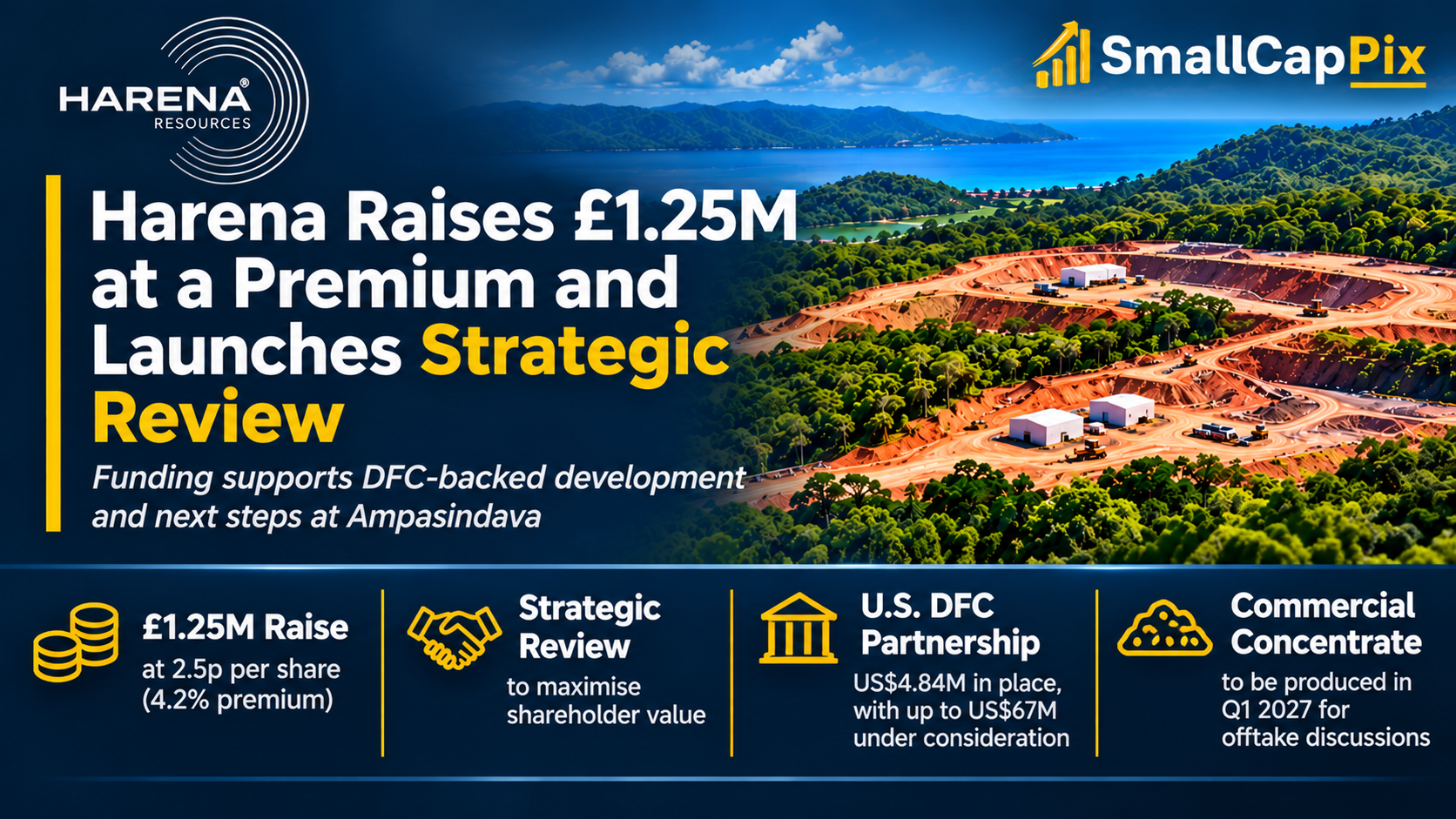
Harena Rare Earths has secured £1.25 million at a premium to its prevailing share price, supporting its U.S. Government-backed development programme. Perhaps more significantly, the Board has initiated a strategic review, believing the company's current market valuation fails to reflect the underlying value of its Ampasindava rare-earth project.
Premium Fundraise Strengthens Harena's Position
Harena Rare Earths (LSE: HREE) has announced a £1.25 million placing and subscription to support the next phase of development at its 100%-owned Ampasindava ionic-clay rare-earth project in Madagascar.
The fundraising has been completed at 2.5p per share, representing a 4.2% premium to the previous closing mid-market price of 2.4p.
Members of the Board and management team have also participated, contributing approximately 10% of the total funds raised, equivalent to around £125,000.
In a junior mining sector where discounted fundraisings are commonplace, securing capital at a premium is an encouraging development.
However, perhaps the most significant element of today's announcement is the Board's decision to initiate a strategic review aimed at maximising shareholder value, citing a disconnect between Harena's current market valuation and the underlying strategic value of Ampasindava.
Supporting the U.S. Government-Backed Development Programme
Importantly, the proceeds will support Harena's own contribution to its development programme backed by the U.S. International Development Finance Corporation (DFC).
Harena already has a Project Development Funding Agreement with DFC worth up to US$4.84 million, with funding drawdowns underway.
The agreement also provides for DFC's consideration of potential subsequent debt or equity financing of up to an estimated US$67 million, subject to further due diligence, appraisal and approval.
With Ampasindava's Pre-Feasibility Study estimating pre-production capital expenditure of US$142 million, the potential scale of this additional financing is significant.
If ultimately secured in full and applied towards construction, it would represent approximately 47% of the project's estimated initial capital requirement.
Today's fundraising provides additional working capital to maintain development momentum alongside the existing DFC funding programme.
Commercial Concentrate Opens the Door to Offtake Discussions
Another noteworthy development is Harena's intention to begin processing ore material from Ampasindava during the first quarter of 2027 to produce a commercial concentrate.
Producing representative concentrate is an important step towards demonstrating the project's potential to prospective customers.
It will allow Harena to formally engage with a broad range of potential offtake partners, potentially laying the foundations for future commercial agreements.
Such agreements could ultimately play an important role in securing project financing, establishing future revenue streams and demonstrating demand for Ampasindava's rare-earth products.
While this does not mean commercial production or revenues are imminent, it represents an important transition towards commercial engagement.
Strategic Review – Could Ampasindava Attract Corporate Interest?
The Board has made its position clear:
“The Board remains of the view that the Company's current market valuation does not adequately reflect the underlying value and strategic potential of the Ampasindava Project.”
Consequently, Harena has initiated a strategic review, supported by its advisers, to assess options for maximising shareholder value.
Regular SmallCapPix readers will recall our recent article exploring the acceleration of M&A activity within the ionic-clay rare-earth sector and whether Harena could attract similar strategic interest.
Recent major transactions have included:
-
Serra Verde: USA Rare Earth's acquisition of the Brazilian ionic-clay rare-earth producer, announced at an implied equity valuation of approximately US$2.8 billion.
-
Meteoric Resources: Lynas Rare Earth's proposed A$968 million acquisition of the company behind Brazil's Caldeira ionic-clay rare-earth project.
Harena's Executive Chairman, Ivan Murphy, specifically referenced recent sector transactions in its latest announcement, highlighting valuations significantly above that currently attributed to Harena by the market.
So, what could a strategic review potentially deliver?
Options could include a strategic investment from a major industry participant, a joint venture, project-level investment, the sale of a stake in Ampasindava or potentially an outright asset or corporate acquisition.
None of these outcomes has been announced, but the formal initiation of a strategic review makes the potential for corporate activity an increasingly interesting part of Harena's investment story.
A Substantial Asset Against a Modest Market Valuation
Ampasindava already possesses a number of attributes that could make it attractive to strategic industry participants.
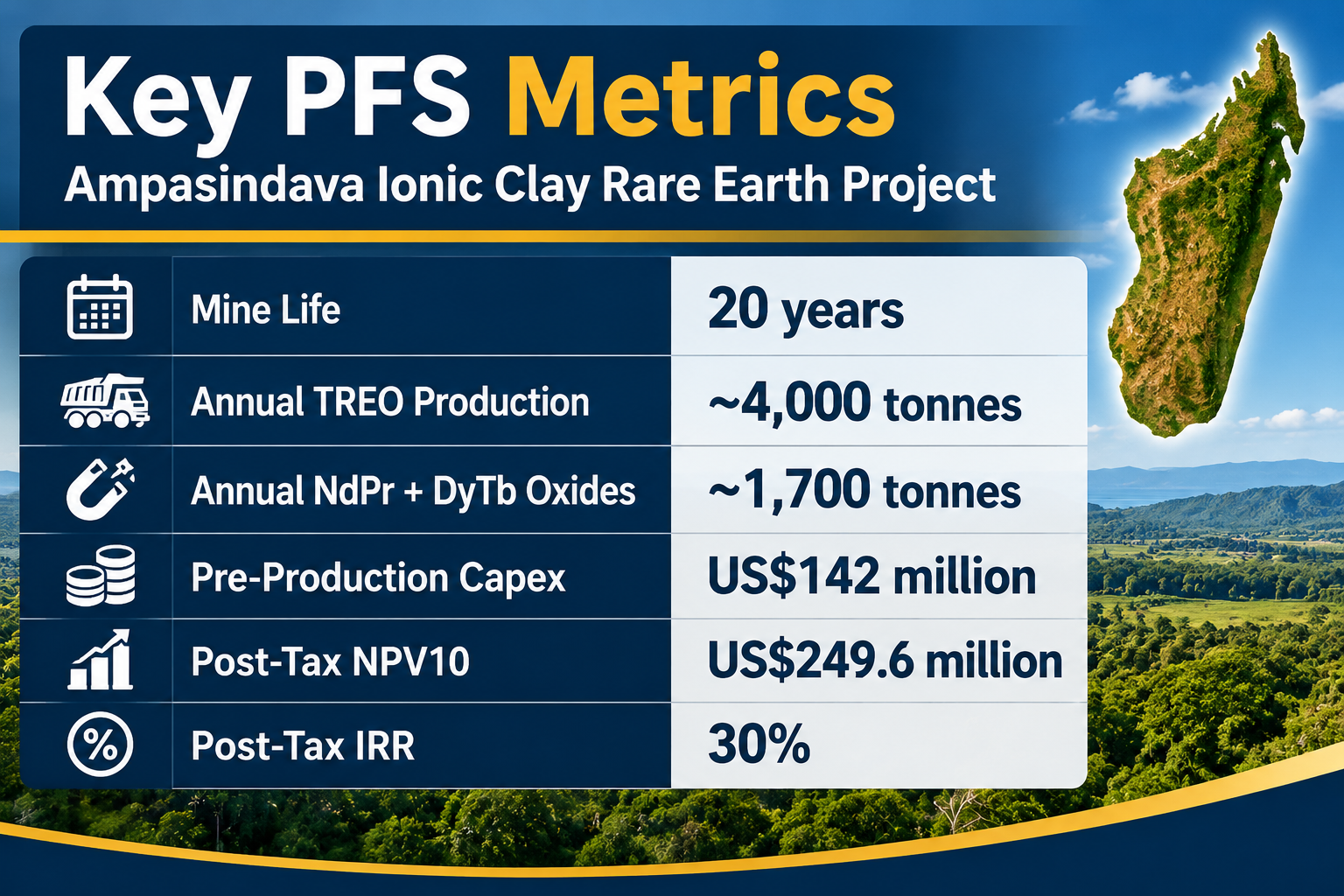
The project also benefits from an Exploitation Permit, U.S. Government development funding and exposure to strategically important magnet rare earths.
Against an implied market capitalisation of approximately £20 million at today's fundraising price, it is understandable why the Board believes there is considerable underlying value yet to be reflected by the market.
Nevertheless, project NPV is not directly equivalent to corporate valuation, with financing, environmental approvals, technical execution and development risks still to be addressed.
The SmallCapPix Take
Today's announcement is about considerably more than raising £1.25 million.
The premium fundraising, management participation and continued institutional support provide an encouraging backdrop as Harena advances its DFC-backed development programme.
The planned production of commercial concentrate also introduces another potential catalyst for 2027, opening the door to formal engagement with prospective offtake partners.
However, for us, the strategic review is arguably the most intriguing development.
Harena's Board is openly questioning the company's market valuation against a backdrop of significant corporate activity in the ionic-clay rare-earth sector.
With a substantial resource, an Exploitation Permit, established U.S. Government backing and potential further DFC financing, Ampasindava possesses several strategically attractive characteristics.
Whether the review ultimately leads to a strategic partnership, project-level investment or something more transformational remains to be seen.
What is clear is that Harena is no longer simply focused on advancing Ampasindava technically — it is now formally exploring how to unlock its underlying value for shareholders.
That could make 2027 a particularly interesting year for the company.